
Lymphedema Awareness Month: Finding the Right Compression Garment in Portland
March is Lymphedema Awareness Month, an opportunity to increase understanding of lymphedema and the resources available to people managing this condition.
For people living with lymphedema, finding the right compression garment can be an important part of an individualized treatment and long-term management plan. But compression is not one-size-fits-all. The appropriate garment, compression level and fit depend on your body, your prescription and your specific needs.
At Just Like A Woman in Portland, Oregon, our nationally certified compression fitters provide private, personalized fittings for medical compression garments. We offer both ready-to-wear and custom compression garments for different areas of the body, lifestyles and comfort preferences.
Our goal is simple: take the guesswork out of finding compression and help you understand your options.
What Is Lymphedema?
Lymphedema is swelling caused by a buildup of lymph fluid in the body. It commonly affects the arms or legs but can also occur in other areas.
Lymphedema may develop when the lymphatic system is damaged, blocked or does not develop as expected. Some people are born with lymphatic conditions, while others may develop lymphedema following surgery, radiation treatment, infection, injury or another health condition.
Symptoms can vary from person to person and may include:
- Swelling
- A feeling of heaviness or fullness
- Tightness of the skin
- Changes in how clothing, shoes or jewelry fit
- Reduced flexibility or range of motion
- Discomfort in the affected area
Because swelling can have many different causes, new, sudden or unexplained swelling should be evaluated by a qualified medical provider rather than treated with compression on your own.
How Do Compression Garments Help With Lymphedema?
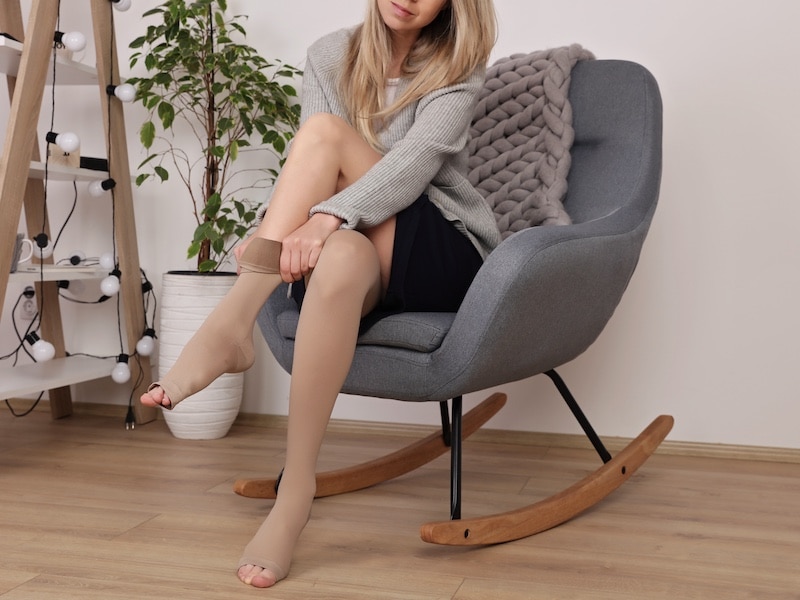
Compression garments apply controlled pressure to an affected area and may be prescribed as part of a person’s lymphedema treatment or long-term management plan. Your medical provider or lymphedema therapist should determine whether compression is appropriate and which compression level you need.
Depending on your prescription, lymphedema compression garments may include:
- Compression arm sleeves
- Gloves and gauntlets
- Knee-high compression stockings
- Thigh-high compression stockings
- Compression pantyhose
- Leggings and capri garments
- Foot and toe compression
- Compression bras and vests
- Abdominal and trunk compression
- Face and neck garments
- Nighttime compression garments
- Adjustable compression wraps
- Custom compression garments
The right product should do more than meet a compression specification. It also needs to work with your body, mobility, daily activities and ability to put the garment on and remove it.
Why Professional Compression Garment Fitting Matters
Buying medical compression is different from choosing an ordinary piece of clothing.
During a professional compression garment fitting in Portland, a Just Like A Woman fitter takes detailed measurements and helps evaluate options based on factors such as your prescription, the location of your swelling, body proportions, skin sensitivity, mobility and daily activities.
Your fitter can also consider practical questions such as:
- Does the garment roll, slip or bind?
- Can you comfortably put it on and take it off?
- Does it work with your normal clothing or footwear?
- Do you have limited hand strength, flexibility or mobility?
- Have your measurements or swelling recently changed?
Even ready-to-wear compression garments benefit from professional measurement. A garment that is too loose may not provide the prescribed level of compression, while one that is too tight, too short or incorrectly positioned may be uncomfortable.
Ready-to-Wear vs. Custom Compression Garments
One of the most common questions we hear is whether someone needs a standard or custom compression garment.
Ready-to-Wear Compression
Ready-to-wear garments are manufactured in established sizes, lengths and compression levels. They may be appropriate when your measurements and swelling pattern fit comfortably within a manufacturer’s sizing guidelines.
These garments may provide choices in fabrics, colors, styles and levels of containment for everyday activities.
Custom Compression
Sometimes standard sizing simply does not work for a person’s body or swelling pattern.
A custom compression garment is created from detailed individual measurements and may be recommended when:
- Standard sizes do not fit correctly
- Limb shape varies significantly
- Swelling affects multiple areas
- Skin folds or sensitive areas need additional consideration
- Garments repeatedly roll, bind or slip
- Additional containment is needed
- A healthcare provider or therapist prescribes a custom garment
Just Like A Woman specializes in measuring and fitting complex custom compression garments. Depending on the prescription and manufacturer, custom options may be available for the arms, hands, legs, feet, torso, chest, head, neck and other affected areas.
Your body should not have to fit a limited range of products. The garment should be selected to fit your body.
Daytime and Nighttime Compression Options
Lymphedema management does not necessarily look the same throughout the day.
Daytime compression garments are generally designed for use while standing, walking, working and participating in everyday activities. Nighttime garments are constructed differently and may be prescribed as part of an ongoing lymphedema management plan.
If your care plan includes nighttime compression, your medical provider or lymphedema therapist can help determine which type of garment is appropriate. A daytime compression garment should not automatically be worn overnight unless your provider has specifically instructed you to do so.
Learning How to Wear and Care for Compression
Finding the garment is only part of the process.
At Just Like A Woman, our fitters also provide guidance on how to use and care for your compression garment, including:
- Putting the garment on
- Removing it without unnecessarily stretching the fabric
- Positioning it properly
- Smoothing wrinkles and folds
- Recognizing potential fit concerns
- Washing and drying according to manufacturer instructions
- Using donning and removal aids when appropriate
Compression can sometimes be challenging to put on, especially for people with limited hand strength, flexibility or mobility. Different tools, techniques or garment designs may make everyday use more manageable.
When Should Compression Garments Be Replaced?
Compression garments naturally lose elasticity through regular wear, washing and stretching.
There is no single replacement schedule that applies to every person or every garment. Replacement needs depend on the product, how frequently it is worn, manufacturer recommendations, changes in your measurements, your treatment plan and your insurance benefits.
It may be time for a new fitting or replacement when:
- Your garment feels noticeably looser
- It begins slipping or will not stay in place
- The fabric looks thin, stretched or damaged
- Your swelling has changed
- Your body measurements have changed
- The garment begins causing new pressure or discomfort
- Your prescription has changed
If a compression garment causes pain, numbness, discoloration, skin damage or an unexpected increase in swelling, remove it and contact your medical provider or lymphedema therapist for guidance.
Does Insurance Cover Lymphedema Compression Garments?
Insurance coverage for compression garments varies depending on your diagnosis, prescription, product and individual health plan.
Just Like A Woman is contracted with a number of major health plans and can provide insurance billing for customers when possible. Medicare also provides a benefit for certain prescribed lymphedema compression treatment items, although eligibility and coverage requirements apply.
Depending on your insurance plan, you may need:
- A current prescription
- A documented diagnosis
- Medical provider notes
- Prior authorization
- An in-network supplier
- A deductible, coinsurance or copayment
Our team can help explain the documentation generally required to place an order, but your insurance provider makes the final determination regarding benefits and payment.
Lymphedema Support and Compression Fitting in Portland
Lymphedema Awareness Month is a reminder that managing swelling involves more than simply purchasing a compression garment. Proper measurement, the prescribed compression level, garment style, comfort and your ability to use the garment all matter.
At Just Like A Woman, our nationally certified compression fitters provide private, personalized lymphedema compression garment fittings in Portland. We can help you explore ready-to-wear and custom options based on your prescription, measurements and everyday needs.
Appointments are required for medical compression fittings so we can reserve enough time for measurements, garment selection and education.
Call 503-246-7000 or request an appointment to schedule your compression fitting with Just Like A Woman in Portland.