Breast Self-Awareness and Mammograms: What Portland Women Should Know in 2026
Breast cancer remains one of the most commonly diagnosed cancers among women in the United States. In 2026, the American Cancer Society estimates that approximately 321,910 women will be diagnosed with invasive breast cancer nationwide, and about 42,140 women will die from the disease. The average lifetime risk of developing breast cancer for a woman in the United States is approximately 1 in 8.
Here in Oregon, an estimated 4,290 new cases of female breast cancer are expected to be diagnosed in 2026.
These numbers reinforce the importance of breast health education, recommended screening and paying attention to changes in your own body.
At Just Like A Woman in Portland, Oregon, we support women before and after breast surgery through private mastectomy fittings, breast forms, post-surgical garments, mastectomy bras and other specialty products. While we do not provide breast cancer screening or diagnosis, we believe reliable breast health information is an important part of supporting the women and families we serve.
Breast Self-Exams vs. Breast Self-Awareness
For many years, women were encouraged to perform a formal breast self-exam every month using a specific step-by-step technique.
Current recommendations have changed.
The American Cancer Society no longer recommends routine breast self-exams as a breast cancer screening method for women at average risk. Research has not shown that regularly scheduled self-exams reduce breast cancer deaths.
That does not mean you should ignore your breasts between mammograms.
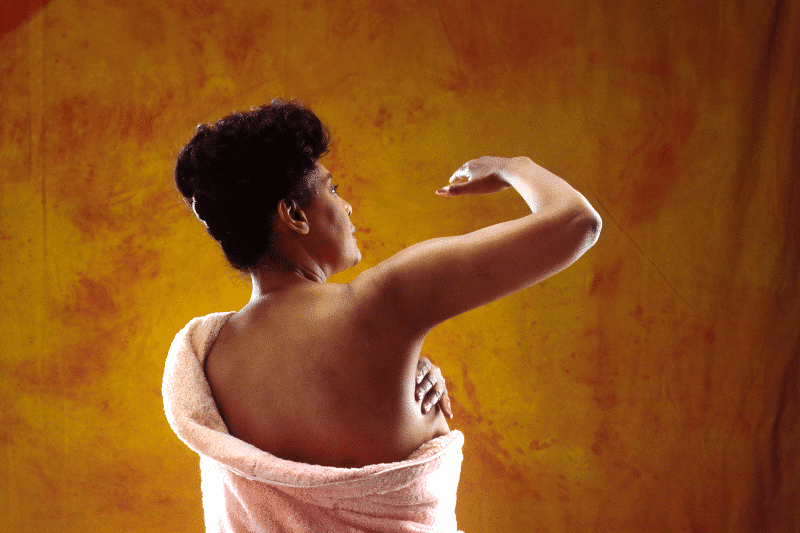
Instead, healthcare organizations emphasize breast self-awareness: becoming familiar with how your breasts normally look and feel so you are more likely to notice a change.
The National Cancer Institute notes that becoming familiar with your breasts during ordinary activities, such as showering or getting dressed, can make it easier to recognize something unusual.
You do not need a complicated monthly routine. You simply need to pay attention to your body.
What Breast Changes Should You Look For?
Most breast changes are not caused by cancer. However, unusual or persistent changes should be discussed with a healthcare provider rather than ignored.
Changes that should be evaluated can include:
- A new lump in the breast or underarm
- A thick or firm area in or around the breast
- A change in breast size or shape
- Swelling of part or all of the breast
- Dimpling or puckering of the skin
- Redness, darkening, scaling or other persistent skin changes
- Changes in the nipple’s shape or direction
- A nipple that becomes flattened or turns inward
- Nipple discharge that is not breast milk
- Persistent breast or nipple changes that are unusual for you
Breast cancer does not always cause a noticeable lump. Early breast cancer may have no physical symptoms at all, which is one reason screening mammography remains important.
What Should You Do If You Find a Breast Lump?
Finding a new lump can understandably be concerning, but a breast lump does not automatically mean breast cancer.
The National Cancer Institute notes that breast changes are common and most are not symptoms of cancer. However, any new or unusual change should still be evaluated by a healthcare professional.
Contact your healthcare provider if you discover a new lump or other breast change, even if you recently had a normal mammogram.
Depending on your symptoms and medical history, your provider may recommend a clinical evaluation, diagnostic mammogram, ultrasound or another type of testing.
The important thing is not to diagnose the change yourself or wait until your next scheduled screening to mention it.
Mammograms Remain an Important Part of Breast Cancer Screening
Knowing how your breasts normally look and feel is helpful, but breast self-awareness does not replace mammography.
Mammograms can identify breast changes before they can be seen or felt. Decades of research have demonstrated that screening mammography can help find breast cancers earlier.
Screening recommendations can differ depending on the medical organization and your individual risk.
As of 2026, the U.S. Preventive Services Task Force recommends screening mammography every two years for women ages 40 through 74 who are at average risk of breast cancer.
The American Cancer Society recommends that women at average risk have the option to begin annual mammography between ages 40 and 44, receive annual mammograms from ages 45 through 54, and transition to mammograms every two years at age 55 or continue annual screening based on their preferences and circumstances.
Your personal screening schedule may be different if you have factors such as:
- A strong family history of breast cancer
- Certain inherited genetic changes
- A personal history of breast cancer
- Previous high-risk breast findings
- Previous radiation treatment to the chest
- Other factors that increase breast cancer risk
Talk with your healthcare provider about your personal risk and which screening schedule is appropriate for you.
Breast Self-Awareness Between Mammograms
Screening mammograms are important, but breast changes can sometimes develop between scheduled screenings.
Rather than setting aside one day each month for a formal exam, pay attention to your breasts during your regular routine.
You may notice changes while:
- Showering
- Getting dressed
- Putting on a bra
- Applying lotion
- Exercising
- Looking in the mirror
The goal is not to constantly search for something wrong. It is simply to know what is typical for your body so that a meaningful change is easier to recognize.
If something feels or looks different and does not resolve, contact your healthcare provider.
Breast Health Is About More Than Finding a Lump
A common misconception is that breast cancer always begins with a lump you can feel.
It does not.
Possible breast cancer symptoms can include changes to the skin, nipple, shape or size of the breast, and some early breast cancers cause no noticeable symptoms at all.
This is why breast health should include both:
Recommended screening: Following the mammography schedule you and your healthcare provider determine is appropriate based on your age and risk.
Breast self-awareness: Recognizing what is normal for your body and reporting new or unusual changes.
Neither should be viewed as a replacement for the other.
Support After a Breast Cancer Diagnosis
If a breast evaluation leads to a breast cancer diagnosis, there may suddenly be many new decisions to make.
Along with medical treatment, breast surgery can affect the fit of bras, clothing and swimwear. Women preparing for or recovering from a lumpectomy, mastectomy or breast reconstruction may also need specialized garments at different stages of recovery.
At Just Like A Woman, our certified mastectomy fitters provide private, personalized fittings in Portland for women before and after breast surgery.
Depending on your surgery and individual needs, we can help you explore:
- Post-surgical bras and camisoles
- Mastectomy bras and pocketed bras
- Breast forms and breast prostheses
- Partial breast forms and symmetry shapers
- Recovery and leisure garments
- Mastectomy swimsuits and swim forms
- Specialty bras after reconstruction
There is no single right solution after breast surgery. Some women choose breast forms, some choose reconstruction, some choose to remain flat and others use different options at different times.
Our role is to give you choices and help you find garments that work with your body.
Breast Cancer Support and Mastectomy Fittings in Portland
Breast health education has changed over time. The message for 2026 is not that women need to perform a rigid breast self-exam every month.
Instead, focus on breast self-awareness, appropriate mammography screening and prompt medical evaluation of unusual changes.
And if breast cancer or breast surgery becomes part of your story, you do not have to figure out every post-surgical garment on your own.
Just Like A Woman provides private, personalized mastectomy fittings and breast surgery support at our Portland location:
6333 S Macadam Ave, Suite 102
Portland, OR 97239
503-246-7000
Appointments are required for medical fittings so our team can provide appropriate time, privacy and personalized attention.
Contact Just Like A Woman to schedule a private mastectomy fitting or learn more about breast forms, mastectomy bras and post-surgical products in Portland.