
Compression Therapy for Lymphedema: How Medical Compression Garments Can Help
For many people living with lymphedema, compression therapy is an important part of long term management. Medical compression garments can help manage swelling and support lymphatic fluid movement when they are appropriately prescribed, selected, and fitted as part of an individualized treatment plan.
At Just Like A Woman in Portland, Oregon, our nationally certified compression fitters provide personalized fittings for ready to wear and custom medical compression garments. We work with your prescription and individual measurements to help you find a garment that fits your body, your treatment needs, and your everyday routine.
If you are newly diagnosed with lymphedema or have been wearing compression for years, understanding how compression therapy works can make it easier to participate confidently in your ongoing care.
What Is Lymphedema?
Lymphedema is swelling caused by a buildup of lymph fluid when the lymphatic system cannot move fluid effectively. It most commonly affects the arms or legs, although it can also occur in other areas of the body.
Lymphedema may develop when the lymphatic system is damaged, blocked, or does not develop normally. Depending on the cause, it may be classified as primary or secondary lymphedema.
Secondary lymphedema can develop following cancer treatment, lymph node surgery, radiation therapy, infection, injury, or other conditions that affect the lymphatic system.
Possible symptoms include:
- Swelling
- A feeling of heaviness or fullness
- Tightness in the skin
- Changes in how clothing or jewelry fits
- Reduced flexibility or mobility
- Discomfort in the affected area
Lymphedema is generally a long term condition, but treatment and ongoing management can help control symptoms and reduce the impact it has on everyday life.
New, sudden, painful, or unexplained swelling should be evaluated by a healthcare professional before you begin using compression.
What Is Compression Therapy?
Compression therapy uses controlled external pressure to support the management of swelling and fluid accumulation.
For people with lymphedema, a healthcare provider or certified lymphedema therapist may recommend compression as part of an individualized treatment plan. Compression can take several forms, including bandaging, wraps, stockings, sleeves, leggings, and other garments.
Compression is also commonly incorporated into complete decongestive therapy, which may include compression, manual lymphatic drainage, exercise, and skin care under the guidance of a trained professional.
The type and level of compression that is appropriate for you should be determined by your healthcare provider or lymphedema therapist.
How Do Compression Garments Help With Lymphedema?
Medical compression garments apply controlled pressure to an affected area.
For people with lymphedema, properly selected compression can help limit the accumulation of fluid and support the movement of lymphatic fluid through the affected area. Compression garments are commonly used as part of ongoing lymphedema management after swelling has been evaluated and a treatment plan has been established.
Depending on your individual needs, your provider may prescribe compression for daytime use, nighttime use, or both.
The appropriate garment depends on factors such as:
- Where your swelling occurs
- Your prescribed compression level
- Your measurements
- The shape of the affected area
- Your mobility and dexterity
- Skin sensitivity
- Your daily activities
- Your overall treatment plan
That is why professional measurement and fitting are so important.
What Are Medical Compression Garments?
Medical compression garments are specially designed garments that provide measured, graduated, or otherwise controlled compression.
They are different from ordinary tight clothing or nonmedical support garments. Medical compression is available in different compression levels and constructions, and the appropriate choice depends on your diagnosis and prescription.
Depending on your needs, lymphedema compression garments may include:
- Compression arm sleeves
- Gloves and gauntlets
- Knee high compression stockings
- Thigh high compression stockings
- Compression pantyhose
- Leggings and capri garments
- Foot and toe compression
- Compression bras and vests
- Abdominal and trunk compression
- Adjustable compression wraps
- Nighttime compression garments
- Custom compression garments
Just Like A Woman offers fitting services for a wide range of compression products, including ready to wear and complex custom garments.
Why Proper Compression Garment Fit Matters
Compression should provide the prescribed support without unnecessarily creating areas of excessive pressure, slipping, rolling, or bunching.
Even if you know your clothing size, that does not mean you know your medical compression size.
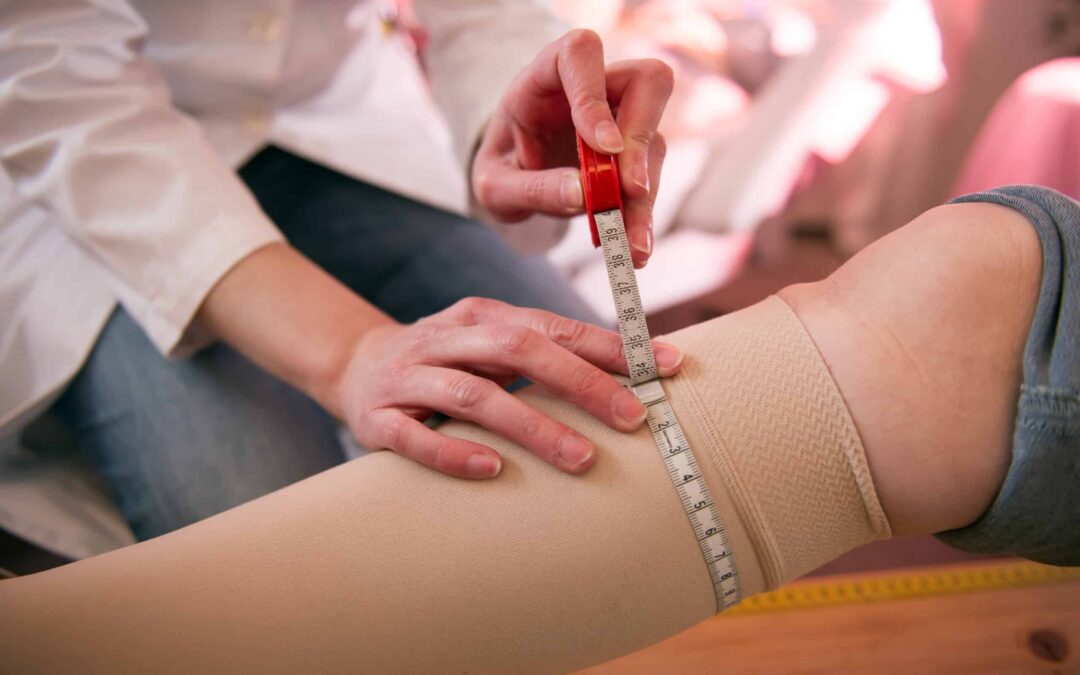
During a professional compression garment fitting in Portland, a Just Like A Woman fitter takes detailed measurements and considers your prescription, swelling pattern, body proportions, mobility, skin sensitivity, and daily activities when helping you evaluate garment options.
Your fitter may also ask practical questions such as:
- Can you put the garment on and remove it independently?
- Does it stay in place during normal activities?
- Does it roll, bind, or bunch?
- Does it work with your clothing or footwear?
- Have your measurements or swelling recently changed?
- Have previous compression garments been difficult to wear?
Finding the right compression garment is not simply about choosing something tight enough. It is about finding a medical garment appropriate for your prescription and your body.
Ready to Wear vs. Custom Compression Garments
Not everyone who needs medical compression requires a custom garment.
Ready to Wear Compression Garments
Ready to wear compression is manufactured in established sizes, lengths, and compression levels.
These garments may work well when your body measurements and swelling pattern fall comfortably within a manufacturer’s sizing guidelines.
Custom Compression Garments
A custom compression garment is created using detailed individual measurements.
Custom compression may be considered when standard sizes do not adequately accommodate your body or swelling pattern. This may include situations involving unusual limb proportions, sensitive areas, skin folds, complex swelling, or garments that consistently roll, slip, or bind.
Just Like A Woman specializes in measuring and fitting custom compression garments for different areas of the body. Available options depend on your prescription, medical needs, and manufacturer.
Your body should not have to conform to a limited range of standard sizes. The garment should be selected to work with your body.
Daytime and Nighttime Compression Are Different
Some people with lymphedema may be prescribed compression during the day, at night, or both.
Daytime compression garments are typically designed for use while you are upright and active. Nighttime compression products are constructed differently and may be incorporated into an ongoing lymphedema management plan.
Do not assume that a daytime garment should also be worn while sleeping. Your healthcare provider or lymphedema therapist should tell you when to wear your compression and which type of garment is appropriate.
Just Like A Woman offers both daytime and nighttime compression options based on prescription and individual needs.
Learning to Put On and Care for Compression
Even the right garment is not very useful if it is too difficult to wear consistently.
Professional fitting can also include education about:
- Putting your garment on correctly
- Removing it without damaging the fabric
- Positioning it properly
- Smoothing wrinkles or folds
- Caring for and washing your garment
- Identifying changes in fit
- Using donning and removal aids when appropriate
This can be particularly important for people with limited hand strength, reduced mobility, arthritis, or other challenges that make compression garments difficult to manage.
Just Like A Woman’s fitters provide education on wearing and caring for compression as part of the fitting experience.
When Should You Replace a Compression Garment?
Medical compression garments do not last indefinitely.
Regular wear, washing, and stretching gradually affect their elasticity. Replacement timing depends on the garment, manufacturer recommendations, frequency of use, your medical needs, and changes in your measurements.
Consider scheduling another fitting if:
- Your garment has become noticeably looser
- It begins slipping or rolling
- The fabric appears stretched or damaged
- Your swelling pattern changes
- Your body measurements change
- Your prescription changes
- The garment develops new areas of discomfort
If a compression garment causes pain, numbness, skin changes, discoloration, or unexpected worsening of swelling, remove it and contact your healthcare provider or lymphedema therapist for guidance.
Professional Lymphedema Compression Fitting in Portland
Compression therapy can be an important part of managing lymphedema, but there is no single garment that works for every person.
At Just Like A Woman, our nationally certified compression fitters provide personalized lymphedema compression garment fittings in Portland, Oregon. We can help you explore ready to wear and custom options based on your prescription, measurements, lifestyle, and everyday needs.
Our goal is to take some of the uncertainty out of medical compression and help you find a solution that works with your body and treatment plan.
Just Like A Woman is located at:
6333 S Macadam Ave, Suite 102
Portland, OR 97239
Call or text 503-246-7000 to schedule your compression fitting, or request an appointment online. Just Like A Woman’s Portland fitters are available Monday through Friday from 10:00 AM to 5:00 PM.